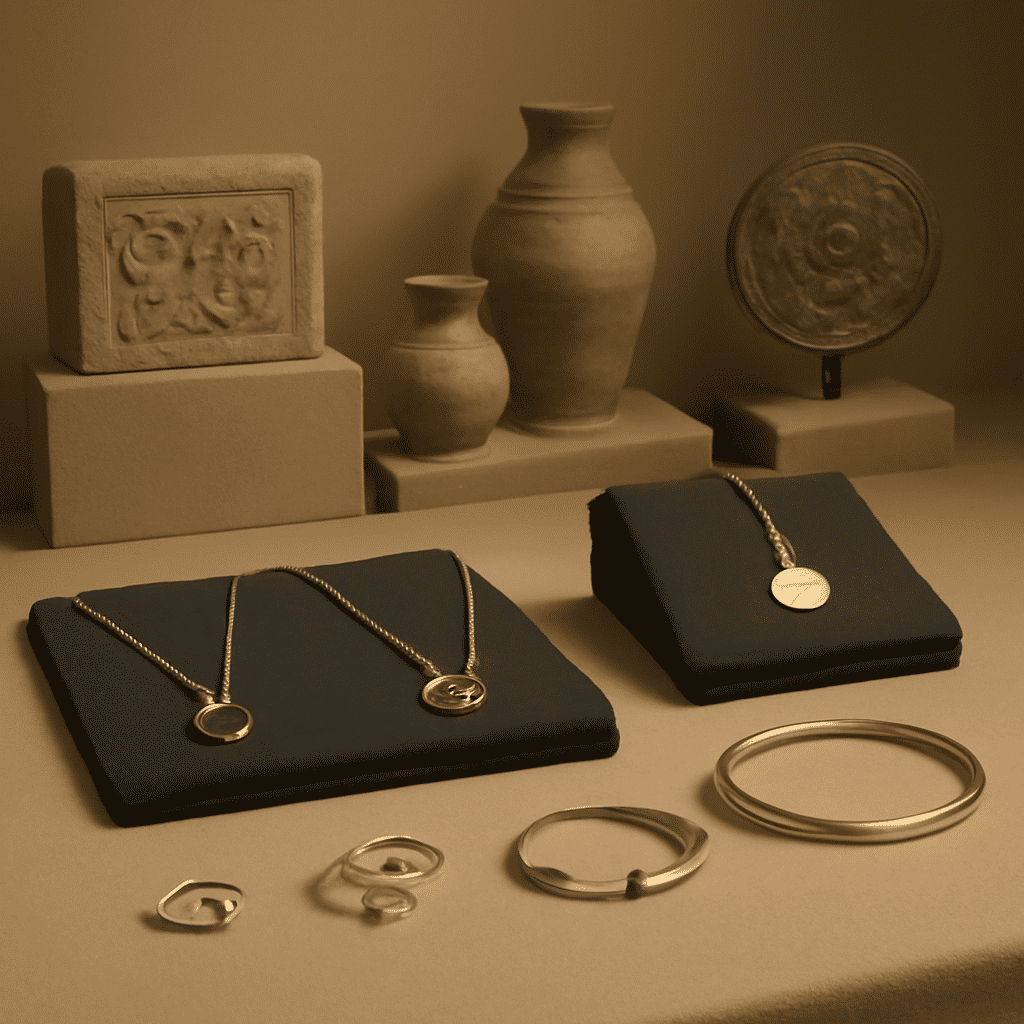
In the world of jewelry design, traditional symbols have long been used to convey cultural meanings and personal stories. These symbols carry deep-rooted significance, often representing beliefs, traditions, and values passed down through generations. As contemporary jewelry designers continue to innovate, they frequently draw upon these traditional motifs, transforming them into pieces that resonate with modern audiences while preserving their original essence.
One prominent example of a symbol used in both traditional and modern jewelry is the lotus flower. In many cultures, the lotus represents purity and renewal due to its ability to emerge beautifully from muddy waters. Contemporary designers might reinterpret the lotus in sleek metallic forms or abstract representations, highlighting its resilience and elegance in new contexts.
Similarly, the infinity symbol, signifying endless possibilities and eternal connection, has made its way into both time-honored and cutting-edge designs. This enduring motif often appears in minimalist styles today, capturing the interest of those who value both simplicity and profound meaning.
The tree of life is another emblem that has traversed the boundaries of time. Rooted in many spiritual and religious traditions, it symbolizes growth, strength, and interconnection. Modern interpretations might see the tree rendered in intricate filigree or paired with gemstones, offering a blend of classic and novel elements.
Celtic knots, with their unending loops and intricate patterns, hold significance related to eternity and the interconnectedness of life. They have been revitalized in modern design through the use of contemporary materials and techniques, providing a fresh perspective on age-old meanings.
As technology advances, designers are increasingly able to experiment with new materials and production methods, allowing for the creation of jewelry that both honors and redefines traditional symbols. 3D printing, for instance, has opened up new avenues for creativity by enabling more precise and customizable designs, pushing symbolic jewelry into exciting new territories.
Collaborations between artists from diverse cultural backgrounds have further enriched the landscape, bringing different symbolic languages into conversation. This cross-cultural exchange fosters innovation, resulting in pieces that are a testament to the evolving nature of tradition within the global landscape.
The transformation of traditional symbols in jewelry not only upholds their historical value but also breathes new life into them, making them relatable and meaningful to a contemporary audience. As these symbols take on novel forms, they continue to connect people to their roots while allowing new stories and meanings to emerge. In this dynamic interplay of history and modernity, jewelry remains a powerful medium for expressing identity, heritage, and creativity.