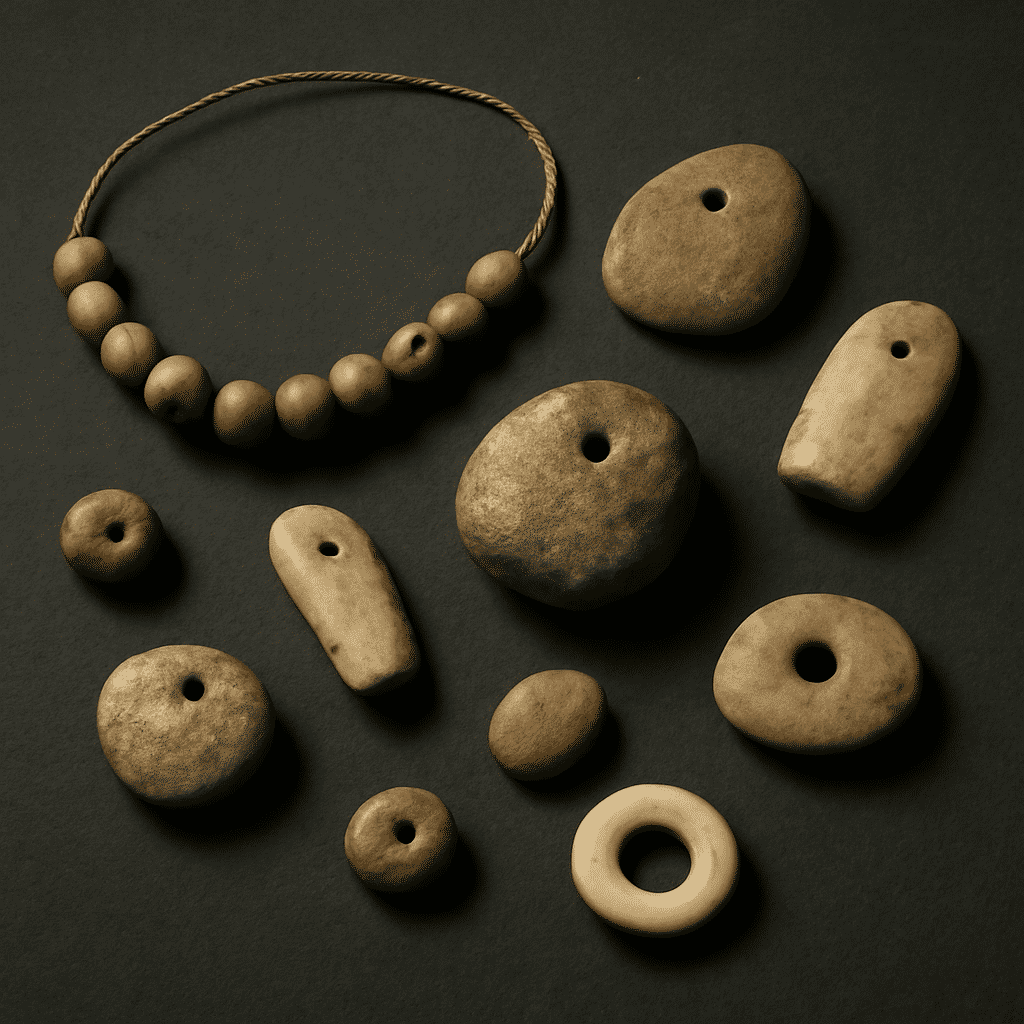
Jewelry, one of humanity's earliest forms of personal adornment, traces its origins back to prehistoric times. Long before the advent of metallurgy, early humans adorned themselves with items crafted from readily available natural materials such as bone, shells, stones, and feathers. These items were not mere decorations but held profound artistic and cultural significance across various ancient civilizations.
Archaeological findings have revealed that as early as 75,000 years ago, humans in regions like Africa were crafting items from ostrich eggshell beads and snail shells. These primitive yet beautifully crafted pieces demonstrate an innate desire for self-expression and social communication. The adornments often signified tribal affiliation, social status, or even protection from the unknown, acting as amulets or talismans.
In Mesopotamia and Egypt, advances in tool-making allowed for more intricate designs and the introduction of metals into craftsmanship. Gold, prized for its luster and malleability, became a symbol of wealth and power. The Egyptians, in particular, took jewelry to artistic heights, using gold in combination with colored stones and glass. Their pieces often depicted symbols of their beliefs, like the scarab, which symbolized rebirth and regeneration.
Similarly, the Indus Valley Civilization demonstrated sophisticated techniques in bead-making and metallurgy. Their use of long carnelian beads, some etched with designs, suggests they not only appreciated artistic details but also had significant trade networks, as carnelian sources were located far from their urban centers.
In East Asia, jade held a place of prominence, especially in China, signifying purity and moral integrity. Artisans intricately carved jade into not only jewelry but also ornaments with profound philosophical and cultural symbolism.
As time progressed, distinct styles began to emerge throughout the world, each reflective of the culture and resources of the people. In Celtic societies, intricate metalwork became the norm, with designs inspired by nature and myth. Meanwhile, in Pre-Columbian America, civilizations like the Maya and Aztecs adorned themselves with spectacular items made from jade, obsidian, and gold, reflecting their cosmological beliefs and social hierarchy.
In all these ancient cultures, these adornments transcended mere decoration; they played crucial roles in rituals, ceremonies, and daily attire, conveying messages about identity and the cosmos. They were not only expressions of individual creativity and aesthetic sensibility but also of collective cultural values and cosmological narratives.
The evolution of jewelry is a testament to human ingenuity and a deep-seated desire to create and communicate through art. As we explore these ancient beginnings, we gain insights into the lives and beliefs of people who laid the foundations of artistic expression that continue to influence us today.